This post contains affiliate links. As an Amazon Associate, Under Desk Elliptical earns from qualifying purchases, at no extra cost to you. See our affiliate disclosure.
Sitting all day is easy. Too easy. The real challenge? Staying active without sacrificing productivity. That’s exactly where this FitDesk FDX 2.0 review comes in. If you’ve been hunting for a way to move more while you work, this compact desk bike promises to blur the line between fitness and focus. But does it actually deliver?
I’ve taken a deep look—features, comfort, usability, real-world practicality. Not just specs. Real use.
Let’s get into it.
What Is the FitDesk FDX 2.0?
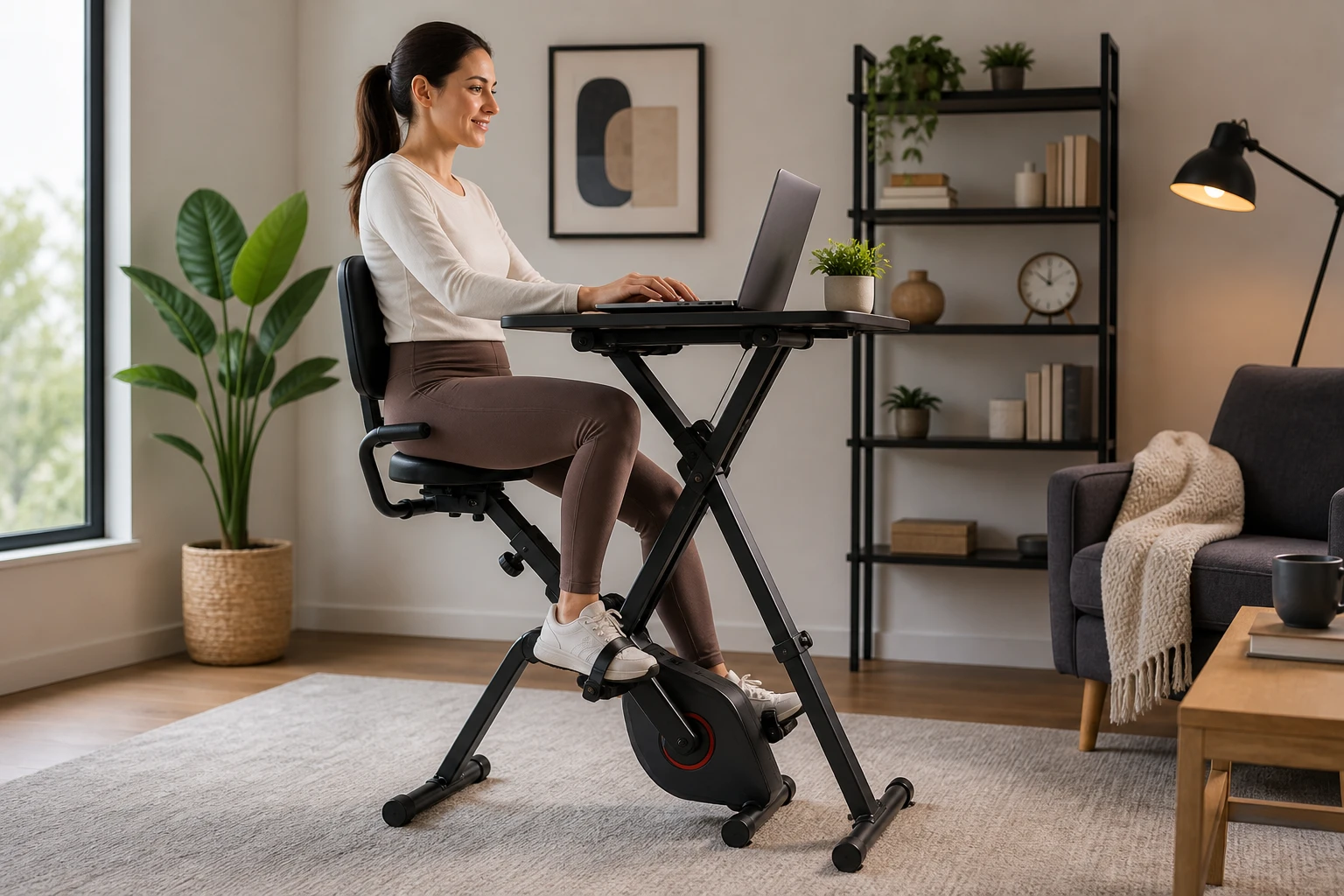
The FitDesk FDX 2.0 is a folding desk bike designed for people who want light cardio while working. It combines a stationary bike with a small workstation. Simple concept. Surprisingly effective—if executed well.
FitDesk as a brand has been around for years, focusing on under-desk and active workstation solutions. They’re not chasing high-performance athletes. They’re targeting everyday users. Office workers. Remote professionals. People who just want to stop being completely sedentary.
And that matters.
Key Features at a Glance
Here’s what you’re working with:
- Folding X-frame design for easy storage
- Magnetic resistance system (quiet and smooth)
- Built-in desk surface for laptops or tablets
- Digital display (time, distance, calories, speed)
- Adjustable seat with backrest support
- Whisper-quiet operation
It sounds like a productivity dream. But features only matter if they work in practice.
Design and Build Quality
First impression? Solid.
The frame feels sturdy. Not gym-grade heavy, but not flimsy either. It strikes a practical balance between durability and portability.
The folding mechanism is one of its strongest points. You can collapse it and tuck it away when needed. Perfect for smaller apartments or shared workspaces.
The desk surface is textured. That’s a smart touch. Your laptop won’t slide around while you pedal. It’s not massive, though—so don’t expect a full dual-monitor setup.
Here’s a quick breakdown:
| Feature | Experience |
| Frame Stability | Strong for seated pedaling |
| Desk Surface | Compact but functional |
| Portability | Easy to fold and store |
| Materials | Durable for daily use |
You won’t confuse this with a premium office desk. But that’s not the point. It’s built to move with you—literally.
Comfort and Ergonomics
This is where most desk bikes fail.
The FitDesk FDX 2.0 doesn’t.
The seat is wider than expected. Cushioned. Supportive. And the addition of a backrest? Huge win. It allows longer sessions without that lower-back fatigue creeping in.
I’ve used similar setups before, and they often feel like punishment after 20 minutes. This one doesn’t. You can sit, pedal, and actually focus.
Adjustability is decent. It accommodates a range of heights, though very tall users may feel slightly constrained.
Pedaling is smooth. No jerky motion. No awkward angles.
If you’re planning to use it daily, comfort isn’t optional—it’s everything. And in this FitDesk FDX 2.0 review, comfort is one of its standout strengths.
Performance and Resistance Levels
Let’s be clear about one thing.
This is not a high-intensity workout machine.
The magnetic resistance system offers a range from very light to moderate. That’s intentional. You’re supposed to pedal while working—not gasping for air.
Think:
- Light movement during emails
- Steady pedaling during meetings
- Low-impact activity for recovery days
If your goal is calorie burn through intense training, this isn’t it.
But if your goal is consistent movement throughout the day? It works.
Here’s how the resistance feels:
| Level | Use Case |
| Low | Passive movement while typing |
| Medium | Light cardio during calls |
| High | Short bursts of effort (still moderate) |
It’s designed for sustainability, not intensity.
Noise Level: Can You Actually Work?
Short answer: yes.
Long answer: surprisingly yes.
The magnetic resistance system keeps noise to a minimum. You hear a faint hum at most. No grinding. No squeaking.
You can:
- Take Zoom calls
- Join meetings
- Work in shared spaces
And nobody will notice.
This is one of the biggest selling points in this FitDesk FDX 2.0 review. If it were noisy, it would defeat the entire purpose.
Ease of Assembly and Setup
You don’t need to be a handyman.
Assembly takes about 30–45 minutes. Instructions are clear. Tools are usually included.
Steps are straightforward:
- Attach the frame components
- Secure the seat
- Install pedals
- Adjust height
That’s it.
Once set up, it’s intuitive. Sit down. Adjust. Start pedaling.
No complicated learning curve.
Desk Usability: Can You Really Work on It?
This is the make-or-break factor.
And honestly? It depends on how you work.
Typing is possible. Not perfect—but usable. There’s slight movement, especially if you pedal faster.
Best use cases:
- Laptop work
- Light typing
- Browsing, reading, emails
Less ideal:
- Precision tasks
- Graphic design
- Heavy typing sessions
If you pair it with an external monitor, things improve significantly. Keep your screen at eye level. Use the desk surface for input.
Actionable tip:
Use the FitDesk for low-focus tasks and switch to a traditional desk for deep work.
That’s how you maximize both productivity and movement.
Display and Tracking Features
The LCD display is simple. Basic.
It tracks:
- Time
- Distance
- Speed
- Calories burned
No app connectivity. No Bluetooth. And no fancy metrics.
Is that a downside?
Depends on your expectations.
If you want detailed fitness tracking, you’ll need a smartwatch or fitness app alongside it.
If you just want a general sense of activity? It’s enough.
Pros and Cons
Let’s keep it real.
Pros
- Quiet enough for work environments
- Comfortable seat with back support
- Foldable and space-saving
- Encourages consistent daily movement
- Easy to use and maintain
Cons
- Limited resistance for serious workouts
- Desk surface is small
- Basic display features
- Not ideal for intense typing sessions
No product is perfect. This one knows its role—and sticks to it.
Who Should Buy the FitDesk FDX 2.0?
This FitDesk FDX 2.0 review makes one thing clear: it’s not for everyone.
But for the right user, it’s incredibly effective.
You’ll benefit if you are:
- A remote worker sitting 6–10 hours daily
- A beginner looking to move more
- Someone recovering from injury
- A senior wanting low-impact activity
- A professional trying to stay active without gym time
It’s about consistency. Not intensity.
Who Should Avoid It?
Let’s not force it.
Skip this if you:
- Want high-intensity workouts
- Need advanced tracking and metrics
- Prefer large desk setups
- Expect gym-level performance
There are better tools for those goals.
FitDesk FDX 2.0 vs Competitors
How does it stack up?
Compared to other desk bikes like DeskCycle or FlexiSpot:
| Feature | FitDesk FDX 2.0 | DeskCycle | FlexiSpot |
| Built-in Desk | Yes | No | Yes |
| Comfort | High (with backrest) | Moderate | Moderate |
| Portability | Foldable | Not foldable | Varies |
| Resistance | Moderate | Higher | Moderate |
The biggest advantage? Integration. The desk + bike combo makes it a complete solution.
Others require a separate desk setup.
Price and Value for Money
The FitDesk FDX 2.0 usually sits in the mid-range category.
Not the cheapest. Not premium-priced either.
What you’re paying for:
- Convenience
- Comfort
- Multi-function design
And honestly, the value isn’t just the hardware.
It’s what it enables.
If it helps you move for 2–3 hours daily instead of sitting still, that’s a long-term win. Health, energy, focus—it adds up.
Real User Feedback
Patterns matter more than individual reviews.
Common praise:
- Quiet operation
- Comfortable seating
- Easy to use daily
Common complaints:
- Desk size limitations
- Not for intense workouts
- Basic display
Overall sentiment? Positive. Especially among remote workers.
Practical Tips to Get the Most Out of It
Let’s make this actionable.
Use it strategically:
- Start with 20–30 minute sessions
- Gradually increase to 1–2 hours daily
- Keep resistance low during work
- Pair with standing breaks
Optimize your setup:
- Use an external monitor
- Maintain proper posture
- Adjust seat height correctly
Consistency beats intensity. Every time.
Final Verdict: Is It Worth It?
So, where does this FitDesk FDX 2.0 review land?
It’s not a fitness revolution. It’s something better.
And it’s a habit changer.
If you struggle with long hours of sitting, this device gives you a simple way to stay active without disrupting your workflow. It’s comfortable. Quiet. Practical.
Not flashy. Not extreme.
Just effective.
And sometimes, that’s exactly what you need.
FAQs
It can support weight loss by increasing daily activity, but it works best when combined with a balanced diet and regular exercise.
Yes, for light typing and emails, though faster pedaling may cause slight movement.
It’s very quiet thanks to its magnetic resistance system, making it suitable for calls and shared spaces.
It accommodates most users, typically from around 4’10” to 6’0”, with adjustable seat height.
Yes, the foldable design makes it easy to collapse and store in small spaces.
No, it operates manually and does not need to be plugged in.
Many users comfortably use it for 1–3 hours per day at low resistance levels.
Yes, its low-impact design and back support make it a good option for seniors.
No, it’s designed for light activity and should complement, not replace, full workouts.
Assembly is straightforward and usually takes about 30–45 minutes with basic tools.