This post contains affiliate links. As an Amazon Associate, Under Desk Elliptical earns from qualifying purchases, at no extra cost to you. See our affiliate disclosure.
Sitting all day drains energy fast. That’s why more people are learning how to use under desk elliptical machines to stay active while working, watching TV, or relaxing at home. These compact machines make movement easier without requiring gym time or intense workouts. But using one properly matters. The right setup, posture, and pacing can make under desk elliptical sessions far more comfortable and effective. Small adjustments create a huge difference over time.
What Is an Under Desk Elliptical?
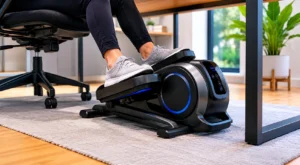
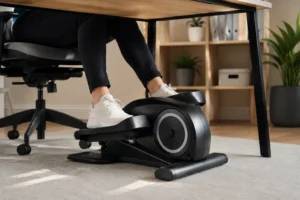
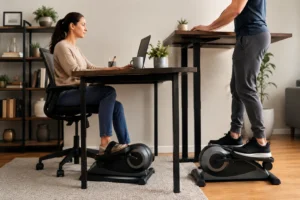
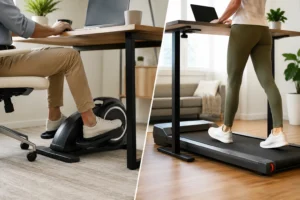
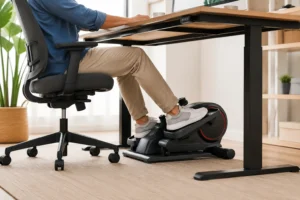
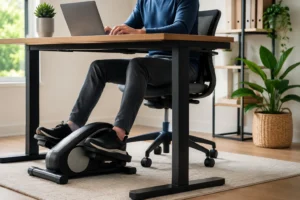
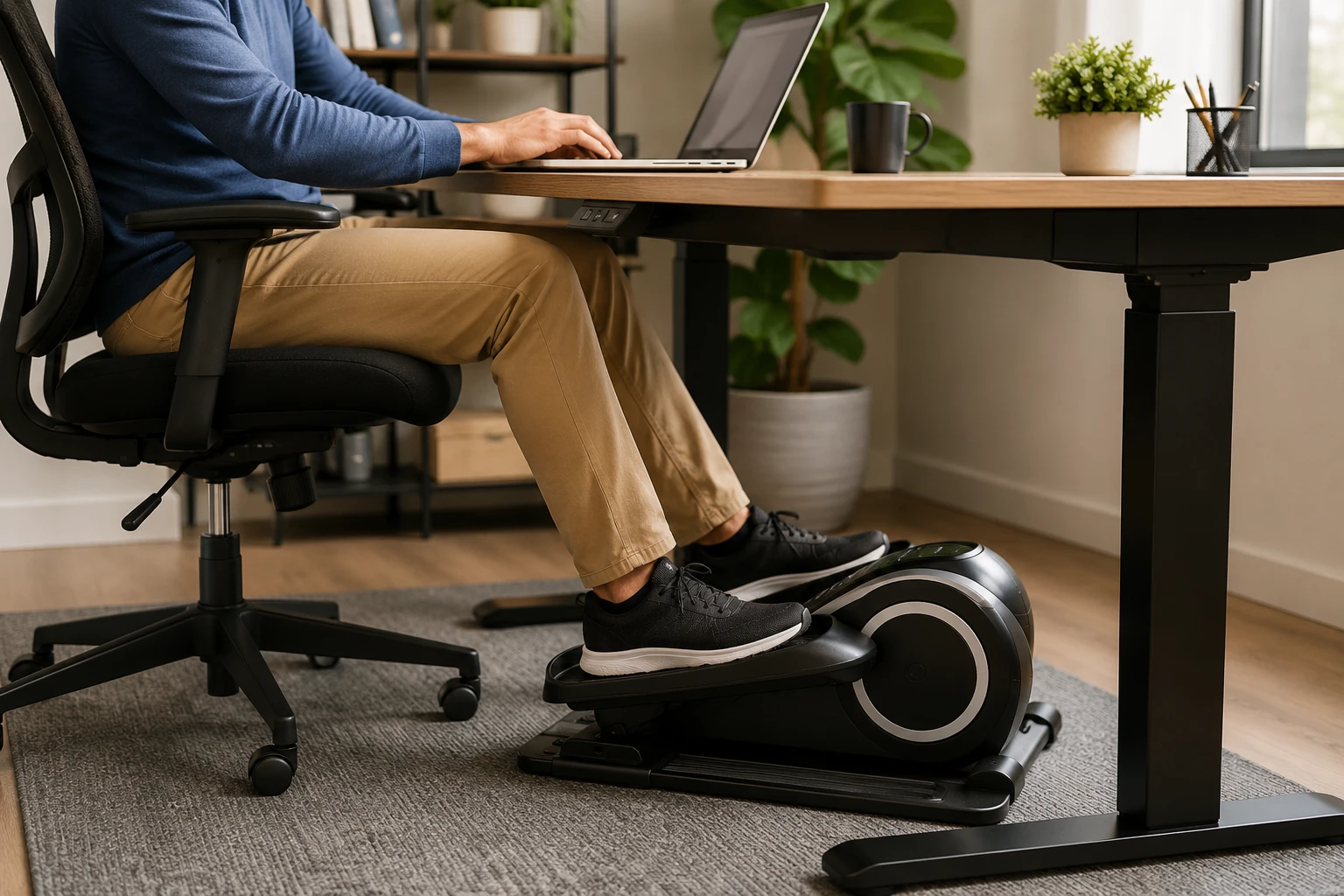
An under-desk elliptical is a compact seated exercise machine designed to fit beneath desks or tables. Instead of walking or running, users pedal in a smooth elliptical motion while sitting. Some models are manual. Others are motorized and assist movement automatically. People commonly use them while:
- Working at a desk
- Taking calls
- Watching television
- Reading
- Gaming
- Recovering from injuries
The biggest advantage is convenience. You can move more without completely changing your daily routine.
Why Proper Usage Matters
A lot of people assume they can immediately jump on the machine and pedal for hours. That usually backfires. Bad positioning creates awkward leg angles. Poor posture strains the lower back. Excessive resistance can irritate knees and hips. Learning how to use under desk elliptical equipment correctly improves:
- Comfort
- Circulation
- Consistency
- Joint support
- Long-term usability
Proper seated movement also improves long-term comfort and reduces unnecessary physical strain, especially during repetitive motion activities associated with Ergonomics The goal is sustainable movement. Not exhaustion.
How to Set Up an Under Desk Elliptical Correctly
Choose the Right Desk Height
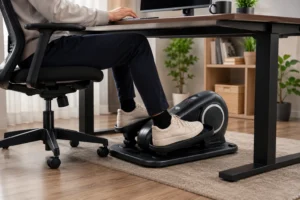
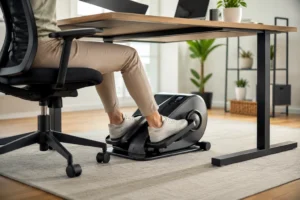
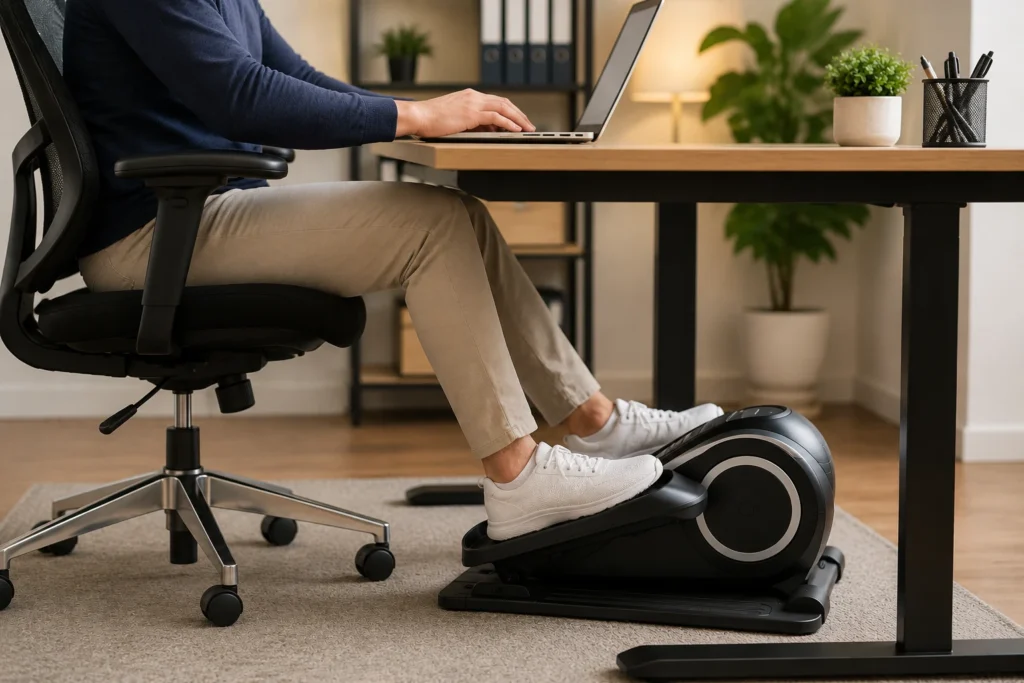
Desk clearance matters more than many people realize. Your knees should move comfortably without hitting the underside of the desk during pedaling. A cramped setup quickly becomes frustrating.
| Setup Element | Recommended Position |
| Knee Clearance | 2–4 inches below desk |
| Chair Height | Comfortable and upright |
| Foot Placement | Centered on pedals |
| Leg Movement | Smooth and unrestricted |
If your knees constantly touch the desk, adjust the chair or use a higher workstation.
Position the Machine Properly
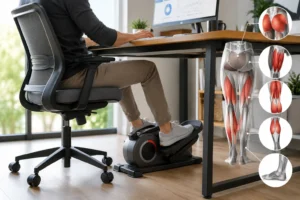
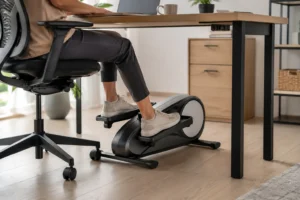
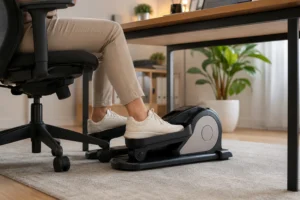
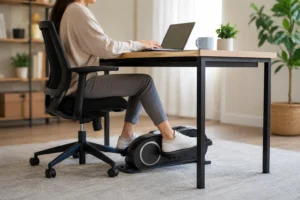
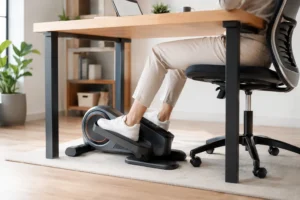
Place the elliptical directly in front of your chair. Too far away creates hip strain. Too close restricts movement. You want natural leg extension without overreaching. Centered positioning creates smoother movement and better balance.
Stabilize the Floor Area
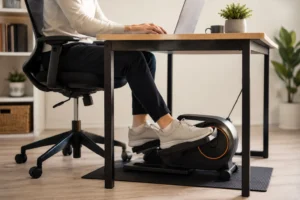
Some floors become slippery during use. Hardwood surfaces especially may allow the machine to slide forward while pedaling aggressively. Simple solutions include:
- Rubber mats
- Exercise flooring
- Non-slip pads
A stable base instantly improves comfort and control.
Wear Supportive Shoes
Barefoot pedaling works for some users, but supportive athletic shoes usually feel better during longer sessions. Good footwear improves:
- Foot support
- Pedal grip
- Pressure distribution
- Overall comfort
Small comfort upgrades help people stay consistent longer.
How to Use Under Desk Elliptical Machines Properly
Learning how to use under desk elliptical machines correctly is mostly about pacing and posture. Not speed.
Start Slowly
Beginners often pedal too hard during the first few sessions. That’s unnecessary. Start with:
- 10–15-minute sessions
- Low resistance
- Smooth movement
- Relaxed pacing
Your body needs time to adapt to repetitive seated movement patterns. After several days, gradually increase your session length. Consistency matters far more than intensity.
Maintain Proper Posture
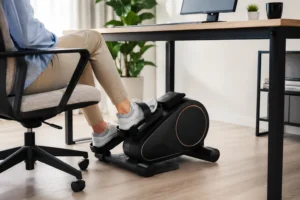
Posture changes everything. Sit upright with:
- Relaxed shoulders
- Neutral spine
- Feet centered
- Hips aligned
Avoid slouching heavily into the desk. Poor posture creates:
- Lower back tension
- Neck stiffness
- Hip discomfort
- Shoulder fatigue
Good posture allows longer and more comfortable sessions.
Keep Pedaling Smooth
Many beginners’ pedal way too fast. Controlled pacing matters because the body responds better to consistent motion patterns rather than chaotic bursts, a concept closely related to Biomechanics
Fast spinning often creates:
- More noise
- Less control
- Poor muscle engagement
- Faster fatigue
Slow, steady movement is usually more effective.
Use Resistance Gradually
High resistance sounds impressive. It is not always practical. Too much resistance can place unnecessary stress on joints, especially during long work sessions.
| Experience Level | Recommended Resistance |
| Beginner | Low |
| Intermediate | Moderate |
| Advanced | Moderate to High |
| Recovery Sessions | Very Low |
Increase resistance slowly once your current setting feels easy.
Best Times to Use an Under Desk Elliptical
One reason these machines became popular is flexibility. You can use them almost anywhere.
During Work Hours
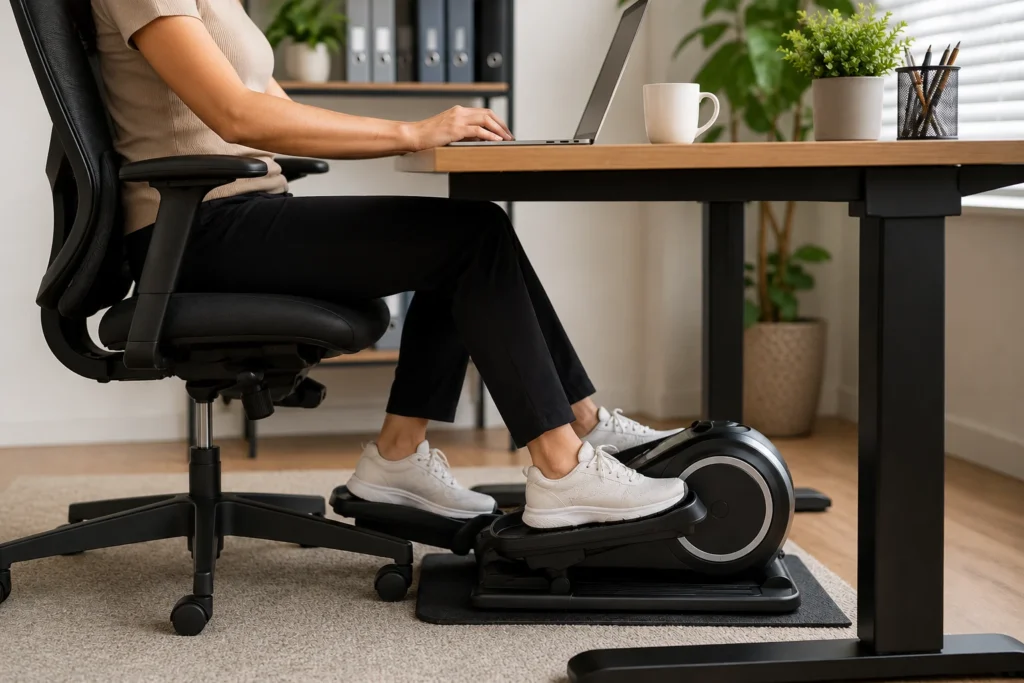
Office workers and remote employees commonly pedal during:
- Emails
- Meetings
- Phone calls
- Administrative tasks
- Research work
Typing while pedaling may feel awkward initially. Most users adjust after a few sessions.
While Watching TV
This may be the easiest way to build consistency. An hour of television suddenly becomes light physical activity instead of complete inactivity. That mental shift matters.
During Gaming Sessions
Gamers spend long periods sitting. Under desk ellipticals add passive movement without interrupting gameplay too much. Casual games pair especially well with steady pedaling.
On Low-Energy Days
Not every day feels productive. That’s okay. Under desk ellipticals allow gentle movement even during low-motivation days when intense exercise feels unrealistic.
How Long Should You Use an Under Desk Elliptical?
There’s no perfect universal number. It depends on comfort, goals, and experience level.
Beginners
Start with:
- 10–15 minutes
- Once or twice daily
- Easy resistance
Focus on consistency first.
Intermediate Users
After a few weeks, many users comfortably reach:
- 30–60 minutes daily
- Multiple sessions
- Moderate resistance
Some office workers pedal throughout most of their workday. Low-intensity movement becomes surprisingly manageable over time.
Watch for Overuse Symptoms
More movement is not always better. Pay attention to signs like:
- Knee soreness
- Hip tightness
- Lower back strain
- Foot numbness
- Muscle fatigue
Those issues usually indicate poor setup, excessive resistance, or overuse.
Common Mistakes People Make
Learning how to use under desk elliptical equipment properly also means avoiding common errors.
Sitting Too Close
Restricted movement creates awkward knee positioning and reduced comfort. Your legs should move naturally.
Pedaling Too Fast
Faster movement does not automatically mean better results. Uncontrolled speed often reduces stability and increases fatigue.
Ignoring Posture
Slouching eventually creates neck and back discomfort. Even expensive machines feel uncomfortable with bad posture.
Expecting Rapid Weight Loss
Under desk ellipticals support movement and calorie burn, but they are not miracle fitness machines. They work best as part of an active lifestyle.
Tips to Make Under Desk Elliptical Sessions More Effective
Small habits improve long-term success.
Combine It with Standing Breaks
Even active sitting is still sitting. Stand briefly every hour to stretch and improve circulation. Simple movement breaks help reduce stiffness and fatigue.
Track Your Usage
Many machines track:
- Calories
- Time
- Distance
- RPM
- Step estimates
Tracking progress helps maintain motivation.
Stay Hydrated
Light movement still increases hydration needs slightly. Especially during long workdays.
Use It Consistently
A few minutes daily often produces better long-term habits than occasional intense workouts. Consistency wins.
Can You Lose Weight Using an Under Desk Elliptical?
Yes, but expectations should stay realistic. An under-desk elliptical helps increase daily movement and calorie burn. It does not replace intense cardio or strength training. Still, extra movement throughout the day adds up surprisingly fast. Especially for people who normally sit completely still for hours.
Realistic Benefits Include
- Increased activity levels
- Better circulation
- Reduced sedentary time
- Mild calorie burn
- Improved movement consistency
The best results happen when combined with:
- Healthy eating
- Walking
- Better sleep
- Regular exercise
Under desk ellipticals work best as support tools within a healthy routine.
Who Should Be Careful Using One?
Most healthy adults tolerate these machines very well because they are low impact. Still, some users should be cautious.
Certain Medical Conditions
Consult a healthcare provider if you have:
- Severe knee problems
- Hip injuries
- Circulation disorders
- Recent surgeries
- Chronic mobility issues
Low impact does not mean zero strain.
Stop If Pain Appears
Mild fatigue is normal. Sharp pain is not. Pain often signals:
- Bad positioning
- Excessive resistance
- Poor posture
- Overuse
Listen to your body carefully.
Features to Look for in an Under Desk Elliptical
Not every machine performs equally. Some are smooth and quiet. Others wobble constantly.
Important Features Include
| Feature | Why It Matters |
| Quiet Operation | Better for offices |
| Adjustable Resistance | Easier progression |
| Stable Base | Improved safety |
| Compact Design | Better desk compatibility |
| Tracking Screen | Monitors progress |
| Portability | Easier storage |
Motorized models are especially popular among seniors because they assist movement automatically. Manual models generally provide more active engagement.
Final Thoughts
Learning how to use under desk elliptical machines correctly can completely change how people approach movement during busy days. You do not need extreme workouts to improve activity levels. Sometimes the smartest solution is simply moving more while doing things you already do anyway. That’s exactly why under desk ellipticals continue growing in popularity. Set the machine up properly. Start slowly. Focus on smooth movement. Maintain good posture. Stay realistic about results. Most importantly, stay consistent. Those small daily sessions add up much faster than people expect.
FAQs
Most beginners start with 10–15 minutes and gradually increase session length as comfort improves.
Yes, many people use them daily because they provide low-impact movement that is easier on the joints than high-intensity workouts.
It can support weight loss by increasing daily calorie burn and reducing sedentary time when combined with healthy eating and regular activity.
Typing may feel awkward during the first few sessions, but most users adjust quickly once they find a comfortable pedaling rhythm.
Low resistance is usually best for beginners because it allows smoother movement and reduces unnecessary joint strain.
Many seniors use them comfortably because they provide gentle, seated movement with less impact on the knees and hips.
Supportive athletic shoes generally improve comfort, pedal grip, and foot stability during longer sessions.
Knee discomfort often comes from poor positioning, excessive resistance, or sitting too close to the machine.
Not completely. It works best as a supplement to walking and other forms of movement rather than a full replacement.
Motorized models are helpful for users who want assisted movement, while manual models usually provide more active engagement and resistance control.