This post contains affiliate links. As an Amazon Associate, Under Desk Elliptical earns from qualifying purchases, at no extra cost to you. See our affiliate disclosure.
Many people buy an under-desk elliptical hoping it will help them stay active during long workdays. Then comes the big question: does under desk elliptical count as steps? The short answer is partially. Under desk ellipticals create meaningful movement and calorie burn, but they do not perfectly replicate traditional walking steps. Some fitness trackers count the motion as step equivalents, while others barely register it at all. Still, the health benefits are very real. From improving circulation to reducing sedentary time, under desk ellipticals can play a surprisingly important role in daily fitness. Let’s break down exactly how they work, how step tracking behaves, and why consistent movement matters more than many people realize.
Understanding How an Under Desk Elliptical Works
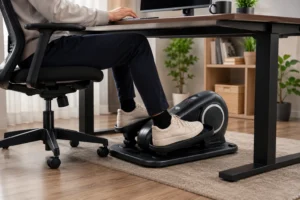
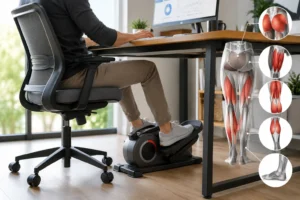
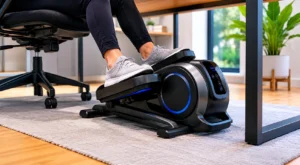
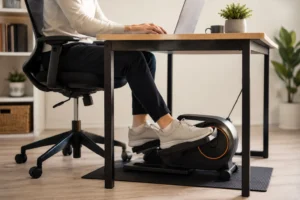
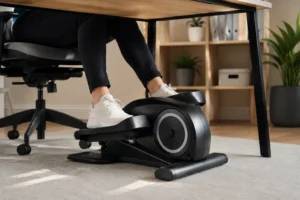
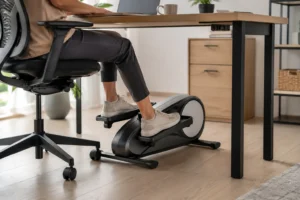
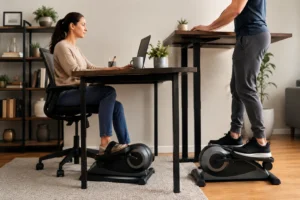
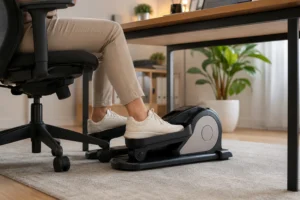
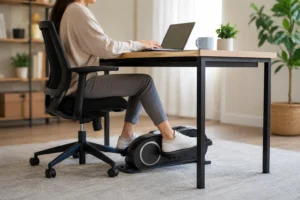
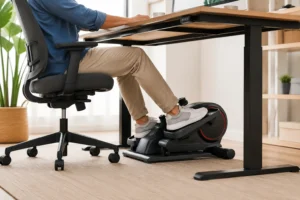
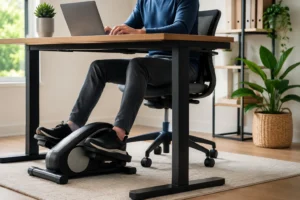
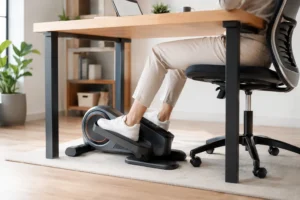
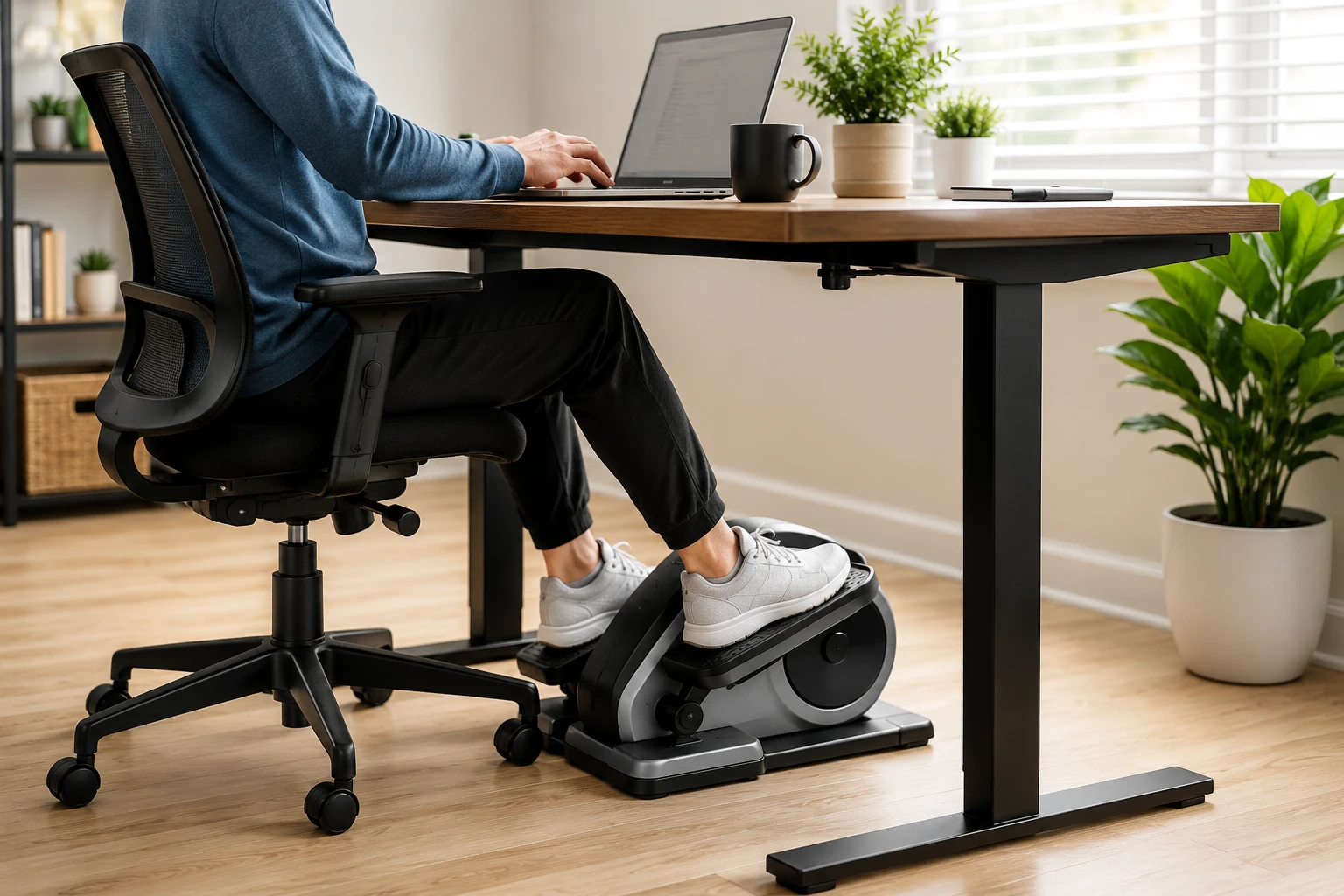
An under-desk elliptical keeps your legs moving while you remain seated. Instead of lifting your feet off the ground like you do while walking, your feet stay attached to pedals that glide in a circular motion. That creates a low-impact workout that feels smooth and controlled. Unlike treadmills or outdoor walking, under desk ellipticals minimize stress on the knees and hips. This makes them especially appealing for office workers, seniors, and people recovering from injuries. Here’s what these machines typically help with:
- Lower-body movement during long sitting periods
- Gentle cardiovascular activity
- Improved circulation
- Increased calorie burn
- Reduced stiffness from sitting all day
The movement may feel subtle initially. But after using one consistently for several hours across a workweek, most people notice the difference in their energy levels and leg activity.
How Under Desk Ellipticals Differ from Walking
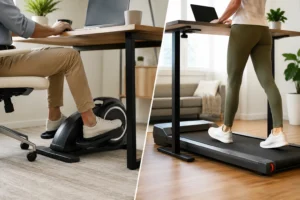
Walking involves repeated ground impact. Your heel strikes the floor, your weight shifts forward, and your arms naturally swing with your gait. An under-desk elliptical works differently. Instead of impact-based movement, it creates smooth rotational motion while seated. Your feet never leave the pedals. That changes how activity trackers interpret the movement. Here’s a simple comparison:
| Activity | Foot Impact | Position | Movement Style | Step Tracking Accuracy |
| Walking | Yes | Standing | Linear gait | Very accurate |
| Jogging | Yes | Standing | Faster gait | Very accurate |
| Under desk elliptical | No | Seated | Circular motion | Often inconsistent |
| Stationary bike | No | Seated | Rotational motion | Frequently missed |
The reduced impact is one of the biggest benefits of an under-desk elliptical. Your joints experience far less strain compared to long walks or treadmill sessions. But because the motion is different, fitness trackers often struggle to recognize it as traditional steps.
What Counts as a Step?
Many people assume step counters are highly precise. They are not. Most fitness trackers rely on accelerometers and motion sensors that estimate movement patterns. They look for repetitive motions associated with walking or running. When you walk, your body produces a recognizable rhythm:
- Arm swinging
- Hip movement
- Foot impact
- Consistent gait patterns
That’s easy for trackers to detect. Under desk ellipticals confuse these systems because:
- Your upper body may stay relatively still
- Your feet remain connected to pedals
- The movement is smooth rather than impact-based
- You remain seated throughout the activity
Fitness trackers rely heavily on motion-detection technology powered by accelerometers and pattern recognition systems. Some advanced wearables even use concepts related to Kinematics to estimate movement efficiency and body motion. This is why some watches barely count any steps during pedaling while others overestimate dramatically.
So, Does Under Desk Elliptical Count as Steps?
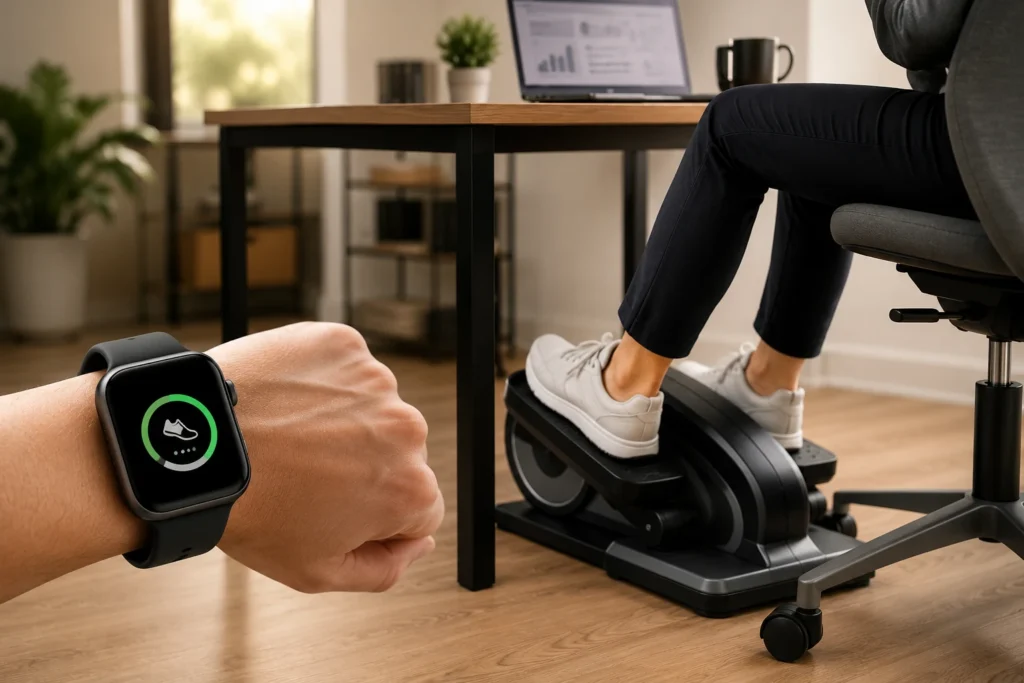
Technically, not in the same way walking does. However, many fitness devices still convert elliptical movement into estimated step equivalents because your body is actively moving and burning energy. That distinction is important. Your muscles, circulation, and metabolism respond to movement regardless of whether it comes from walking, cycling, or pedaling under a desk. The body cares about activity, not labels. So, while the machine may not produce “true” walking steps, it absolutely contributes to overall movement and calorie expenditure. For many people, that matters far more than achieving a perfectly accurate step count.
Step Equivalents vs. Actual Walking Steps
Some apps and trackers estimate movement as step equivalents rather than literal steps. That means the numbers displayed on your watch may reflect calculated activity instead of direct walking movement. This explains why two people using identical under desk ellipticals can see completely different tracking results. For example:
- Wrist-based trackers may undercount movement
- Smartwatches with exercise modes may detect partial activity
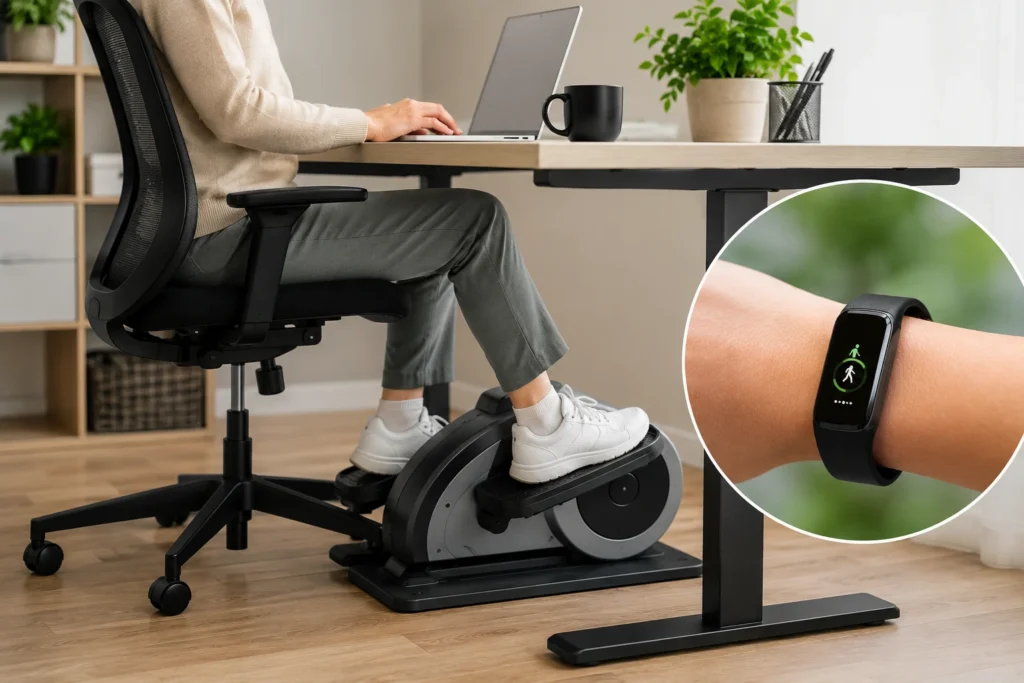
- Ankle trackers often perform better
- Phone-based step counters may fail entirely if the phone stays on the desk
The inconsistency can be frustrating. But focusing too heavily on exact step counts sometimes misses the bigger picture. The real goal is reducing inactivity. And under desk ellipticals accomplish that very effectively.
Can an Under Desk Elliptical Replace Walking?
Not completely. Walking provides several benefits that seated pedaling cannot fully duplicate:
- Weight-bearing movement
- Bone-strength support
- Full-body posture engagement
- Natural outdoor activity
- Greater cardiovascular intensity
Still, under desk ellipticals excel in situations where walking is impractical. They are especially useful for:
- Office environments
- Long meetings
- Remote work
- Injury recovery
- Older adults seeking low-impact movement
- Cold or rainy weather days
The best approach is usually combining both activities. Walk when possible. Pedal while sitting. That combination helps dramatically reduce sedentary behavior throughout the day.
Calories Burned Compared to Walking
One reason under desk ellipticals remain popular is their ability to increase calorie burn during otherwise inactive hours. The exact calorie burn varies depending on:
- Body weight
- Pedaling speed
- Resistance level
- Duration
- Consistency
Here’s a general comparison:
| Activity | Estimated Calories Burned Per Hour |
| Slow walking | 150–220 |
| Brisk walking | 250–350 |
| Under desk elliptical (light resistance) | 120–180 |
| Under desk elliptical (moderate resistance) | 200–300 |
Those numbers may not sound massive initially. But they accumulate quickly across weeks and months. Burning an additional 150 calories daily could create meaningful long-term results over time. Human movement and energy expenditure involve surprisingly complex biological processes. Even light pedaling activates systems connected to Mitochondrion, which plays a central role in how the body converts nutrients into usable energy.
Why Movement Matters More Than Step Counts
This is where many people get stuck. They obsess over numbers while ignoring actual behavior changes. The real issue isn’t failing to hit 10,000 steps. It’s sitting motionless for hours every day. Long-term inactivity has been linked to:
- Reduced circulation
- Increased stiffness
- Lower calorie expenditure
- Poorer cardiovascular health
- Decreased daily energy levels
Under desk ellipticals interrupt that cycle. Even gentle pedaling can help:
- Increase blood flow
- Keep leg muscles engaged
- Prevent prolonged stiffness
- Maintain light calorie burn
- Improve focus during work
Many people report feeling more alert while pedaling lightly during meetings or computer work. That steady movement helps the body stay active instead of slipping into complete inactivity.
Can Under Desk Ellipticals Help with Weight Loss?
Yes, but with realistic expectations. An under-desk elliptical alone will not create dramatic weight loss overnight. However, it can become a valuable tool for increasing total daily activity. That matters because consistency often produces better long-term results than occasional intense workouts. One important factor here is NEAT: Non-Exercise Activity Thermogenesis. NEAT refers to calories burned through everyday movement outside structured workouts. Examples include:
- Standing
- Walking around the house
- Fidgeting
- Cleaning
- Under desk pedaling
These small movements add up significantly over time. For people with desk jobs, increasing NEAT can make a major difference in overall calorie expenditure.
Common Mistakes That Limit Results
Not everyone gets the same benefits from an under-desk elliptical. Several common mistakes reduce effectiveness.
Using Very Low Resistance Forever
Your body adapts over time. Gradually increasing resistance helps maintain challenge and improve calorie burn.
Pedaling Inconsistently
Using the machine for five minutes occasionally will not create major results. Consistency matters far more.
Assuming It Replaces Exercise Entirely
Under desk ellipticals support movement, but they do not replace strength training, walking, or cardiovascular exercise completely.
Ignoring Posture
Poor posture during long seated sessions can create unnecessary discomfort. Maintain proper ergonomic alignment while pedaling.
Best Ways to Track Under Desk Elliptical Activity
If step counts seem inaccurate, focus on better metrics instead. Useful measurements include:
- Active minutes
- Calories burned
- Heart rate changes
- Total pedaling duration
- Weekly consistency
These indicators often provide a more realistic picture of actual activity. Many users also manually log elliptical sessions into fitness apps instead of relying entirely on automatic detection.
Which Fitness Trackers Work Best?
Different devices handle under desk elliptical tracking differently.
Apple Watch
Can detect some movement, especially if arm motion occurs during pedaling.
Fitbit
May undercount activity because wrist movement stays limited while seated.
Garmin
Often performs better when exercise tracking modes are manually enabled.
Smartphone Step Counters
Usually inaccurate because the phone remains stationary on the desk. Some users improve accuracy by wearing trackers closer to the ankle instead of the wrist.
Who Benefits Most from Under Desk Ellipticals?
Under desk ellipticals are not necessary for everyone. But certain groups often benefit significantly.
Office Workers
Long sitting hours make daily movement difficult. Under desk ellipticals help reduce inactivity during work.
Remote Workers
Working from home often eliminates commuting and natural daily movement.
Seniors
Low-impact motion makes activity safer and more comfortable.
People Recovering from Injury
Gentle movement supports circulation without placing excessive stress on joints.
Beginners Starting Fitness Habits
Under desk ellipticals offer an approachable way to increase daily movement without intimidating workouts.
Tips to Get Better Results from an Under Desk Elliptical
Want better long-term results? Focus on consistency and gradual progress.
Build a Daily Routine
Use the machine during specific work tasks like meetings or email sessions.
Increase Resistance Slowly
Small increases create more challenge over time.
Combine Pedaling with Walking Breaks
Standing and walking periodically improves posture and circulation even further.
Focus on Long-Term Consistency
Regular daily movement beats occasional bursts of intense effort.
Keep Expectations Realistic
Under desk ellipticals support healthier activity levels. They are not miracle fitness machines.
Common Myths About Under Desk Ellipticals
“It Only Counts If It’s Walking”
False. Your body still benefits from movement even if trackers do not classify it as traditional steps.
“You Burn Huge Calories Effortlessly”
Not exactly. The calorie burns help, but intensity and duration still matter.
“Every Fitness Tracker Measures It Correctly”
Definitely not. Tracking accuracy varies significantly between devices.
“It Completely Replaces Exercise”
No. Under desk ellipticals work best as part of an active lifestyle.
Final Thoughts
So, does under desk elliptical count as steps? Not perfectly. The motion differs from traditional walking, and many trackers interpret the activity inconsistently. But the movement absolutely contributes to overall physical activity. Under desk ellipticals help reduce sedentary behavior, improve circulation, increase calorie burn, and keep your body moving throughout long workdays. And honestly, that’s the bigger win. Many people focus too much on perfect step counts while overlooking the importance of consistent daily movement. If your under-desk elliptical helps you stay active, energized, and less sedentary, it’s already doing something valuable for your health.
FAQs
Apple Watch may count some movement as steps, but tracking accuracy varies because the motion differs from natural walking.
No, walking still provides weight-bearing benefits and more natural full-body movement that seated pedaling cannot fully replace.
Most users burn between 120 and 300 calories per hour depending on resistance, speed, and body weight.
Yes, consistent use can help increase daily calorie burn and reduce sedentary behavior, which supports long-term weight management.
Many trackers rely on arm swing and foot impact patterns that are missing during seated elliptical use.
Yes, they are considered low-impact and can provide gentle movement without placing excessive stress on joints.
Absolutely. Many people use them during meetings, emails, or computer tasks to stay active throughout the workday.
Yes, regular pedaling helps increase blood flow in the legs, especially during long periods of sitting.
Active minutes and workout duration are often more useful measurements than step counts for this type of activity.
Definitely. Even light continuous movement is far healthier than remaining completely sedentary for long hours.